
Many companies plant trees. Far fewer are able to say, a few years later, "Our forest is still there, and it is thriving." The difference is rarely the money. It is the planning.
If your company is thinking about funding a forest through CSR, here is a plain guide to what makes a plantation last, and what to ask before you sign.
Start with the goal
What do you want from the project? A cooler campus? Cleaner air near your plant? Support for local livelihoods? A model forest that people can visit? A clear goal helps choose the site, species and size.
Environmental sustainability is a recognised CSR area
In India, environmental sustainability, ecological balance and the protection of flora and fauna are among the areas recognised for CSR spending. A well-run forest fits naturally here, and it can also connect to the wider goals of sustainable development.
What makes a CSR forest last
- A real site plan. Is the land suitable, available and secure for the long term?
- Good soil work. Poor soil is the main reason plantations fail. Ask how the soil will be prepared.
- Native species. Local trees survive better and support local wildlife.
- Dense, layered planting. Dense forests shade out weeds and become self-sufficient faster.
- Care after planting. Watering, mulching and weeding are needed for the first years. Make sure they are in the budget.
- Local people. Projects that employ local workers earn community goodwill and protection for the forest.
Ask about survival, not just planting
Many reports count how many saplings were planted. The number that matters is how many are still alive a year or two later. Ask for the survival rate, and for how it is measured. Our own projects report a survival rate of 95%+.
Ask for proof
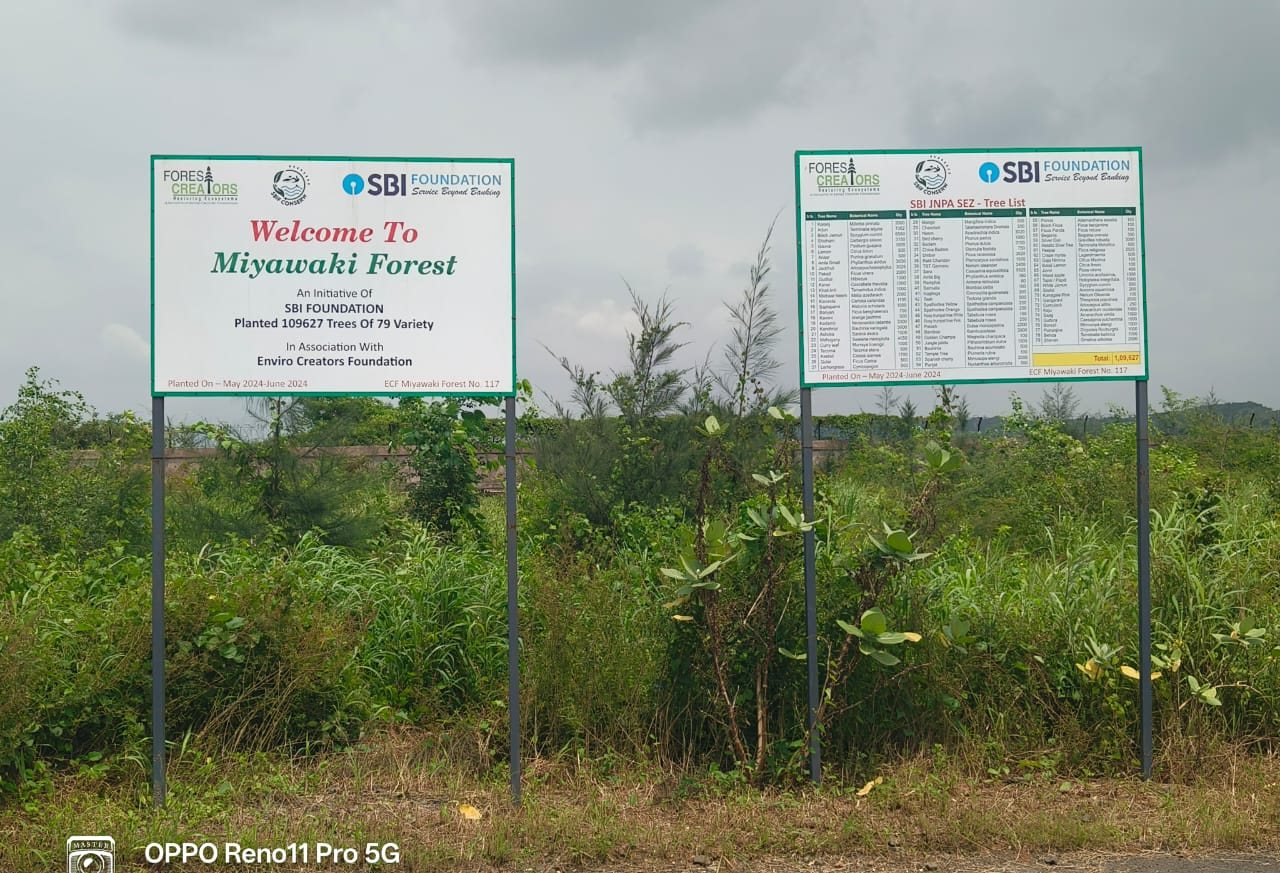
Good projects share photographs taken at the site, with date and location, and regular updates. You should be able to see the same patch of ground before planting, during planting, and as it grows. The photos for our JNPT project, with dates and location stamps, show this kind of record.
Think about the story you can tell
A CSR forest gives you many stories: the barren land you turned green, the workers who planted it, the wildlife that has returned, the students who have visited. These are more powerful than a number in a spreadsheet.
An example: JNPT
SBI Foundation funded 1,08,000 trees at the JNPT SEZ in Nhava Sheva, in collaboration with JNPA. A barren, salty, compacted seven-acre site is now a dense native forest. The project is a clear, visible, long-lasting example of CSR in action.
Beware of common mistakes
- Planting without a plan for care
- Choosing fast but unsuitable species
- Ignoring soil
- Treating planting day as the finish line
- Counting trees but not survival
Frequently asked questions
Can forest plantation count as CSR?
Environmental sustainability and ecological balance are recognised CSR areas in India. Please confirm the details for your company with your CSR adviser.
How much land do we need?
It depends on your goal and budget. Even a small plot can become a dense forest. Talk to us about your site.
Who looks after the forest after planting?
A good CSR plan includes care for the first few years. We include maintenance in our project plans.
Planning a CSR forest? Talk to Forest Creators about a project that lasts.
Talk to Forest Creators