
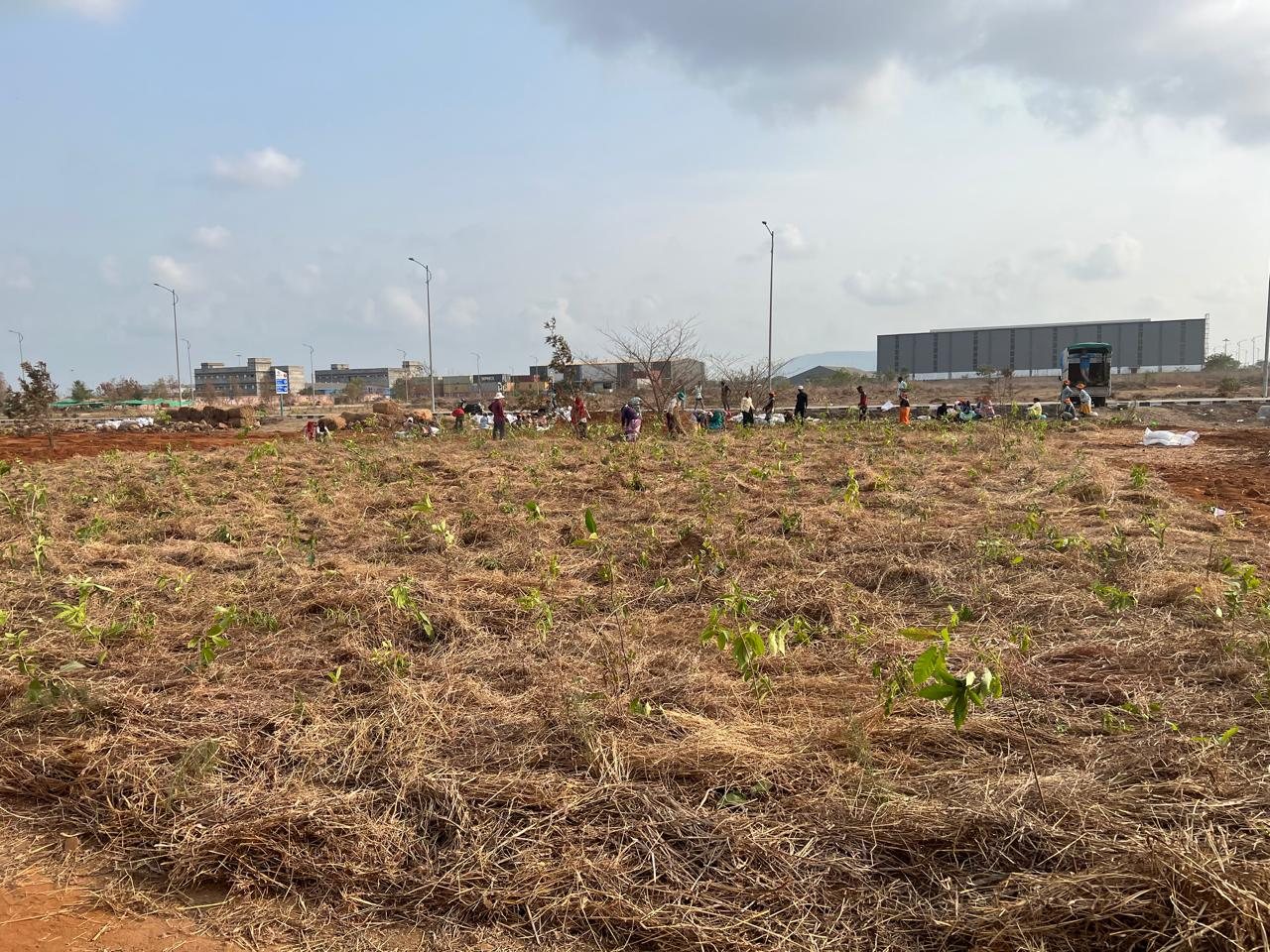
When people hear "planting a forest", they picture trees. But on the ground, a forest project looks like something else: a busy work site. Soil is being moved, saplings are arriving by truck, workers are mixing compost, and local shops are selling pipes and bamboo.
A forest is not only good for nature. It is also a source of work and income for many people nearby. Here is who earns.
Local labourers
Planting a dense forest takes many hands. Workers dig and prepare the planting areas, mix and spread the soil enrichment, plant each sapling, lay mulch, fix stakes and set up watering. After planting, people are needed to water, weed and look after the young trees.
This is why Bharat Vann is designed to be labour-centric. We want a large part of the project budget to flow to local people who do honest work close to home. On our planting days, you see local workers handling the work from morning onward.
Earth-moving and equipment operators
Many sites need the ground levelled or loosened before planting. At our JNPT forest, for example, bulldozer and earth-mover work prepared the land. Operators, drivers and the small businesses that rent out machines all earn from this stage.
Farmers and suppliers of natural inputs
Bharat Vann uses cow dung, compost and jeevamrut to bring the soil to life. These come from farms and dairies. When a forest project buys them, that money goes to the people who produce them. Dairy farmers, compost makers and suppliers of the other ingredients gain a steady new customer.
Local nurseries
A forest needs thousands of saplings, and the saplings must be grown in advance, often months before planting. Nurseries that raise native species benefit directly. A big forest can give a local nursery one of its largest orders of the year. We cover this in more detail in our blog on local nurseries.
Transporters
Saplings, compost, soil enrichment, pipes and stakes all have to reach the site. Truck owners and drivers carry them, and that creates regular work.
Local shops and material suppliers
Forests also use many ordinary materials. Looking at our own sites, you can see bamboo stakes supporting young saplings, mulch spread on the ground, drip irrigation lines and tools for the workers. Local shops that supply these items earn from every project.
Supervisors, trainers and caretakers
Someone needs to watch over quality, count survival and train the workers. Over time, local people who start as labourers can learn to supervise, and some become caretakers who stay with the forest for years.
Why this matters for CSR
For a company funding a forest, this means the impact does not stop at the trees. The same money supports local employment and local businesses. That makes the story stronger for communities, for employees and for the people reading a CSR report.
A forest keeps giving
Even after planting, the forest keeps creating small opportunities: care work, monitoring, educational visits and school groups. A forest that is looked after is a place where people keep coming back.
Frequently asked questions
Do forest projects really create jobs?
Yes. Digging, planting, mulching, watering, transport, nursery work and supplying materials all need people. The forest also needs care for years after planting.
Who benefits most?
Local labourers, farmers who supply natural inputs, nurseries, transporters and small shops usually benefit first, because they are closest to the site.
Can a CSR budget focus on local employment?
Yes. A project can be planned so that most of the work is done by local people. Ask us how it can be done.
Planning a forest that also supports local livelihoods? Speak with Forest Creators about your CSR plans.
Talk to Forest Creators