
Trees do not grow in dirt. They grow in soil, and soil is alive. A spoonful of healthy soil holds countless tiny living things, such as bacteria, fungi and worms, that feed the roots and keep the ground loose and moist.
Many sites where we plant forests have lost this life. The soil is hard, dry and empty. Bringing it back is the most important job in a Bharat Vann forest. Here is how we do it, and why Indian materials are such a good fit.
What "dead" soil looks like
On a construction site or an old industrial plot, the top layer has often been scraped away or packed down by machines. Water runs off instead of soaking in. Roots cannot push through. Nutrients are low, and the tiny creatures that cycle nutrients are missing.
You can plant a sapling in soil like this, but it will struggle. Good soil preparation is what makes the difference between a tree that survives and a forest that thrives.
Cow dung
Cow dung has been used on Indian farms for centuries. It is rich in organic matter and carries beneficial microbes. When it is mixed into poor soil, it feeds the living part of the soil and helps it hold water.
Compost
Compost is made from plant and kitchen waste that has been broken down. It improves the structure of the soil, makes it softer, and slowly releases nutrients to the roots. It also gives the soil something for microbes to eat.
Jeevamrut
Jeevamrut is a traditional fermented preparation used in natural farming. It is usually made from cow dung, cow urine, jaggery, pulse flour and a handful of soil, left to ferment in water. It is full of beneficial microbes and helps wake up the life in the soil.
Why natural inputs suit a forest
- They feed the soil, not just the tree. Natural inputs build long-term fertility.
- They avoid chemical inputs. Our forests are grown with natural soil enrichment, so the soil stays healthy for the plants, insects and animals that arrive later.
- They are local. These materials can be sourced close to the site, which saves transport and supports local suppliers.
- They are familiar. Indian farmers already know how to make and handle them.
What about harsh sites?
Not every site is the same. At our JNPT forest, the ground was heavily compacted and salty. There we enriched the soil with a balanced mix of organic compost, biochar, cocopeat and beneficial microbes, which recreated the conditions of a forest floor. We also used mulch to keep moisture in, and we planted only salt-tolerant native species. The right soil recipe depends on the site.
Mulch: the final blanket
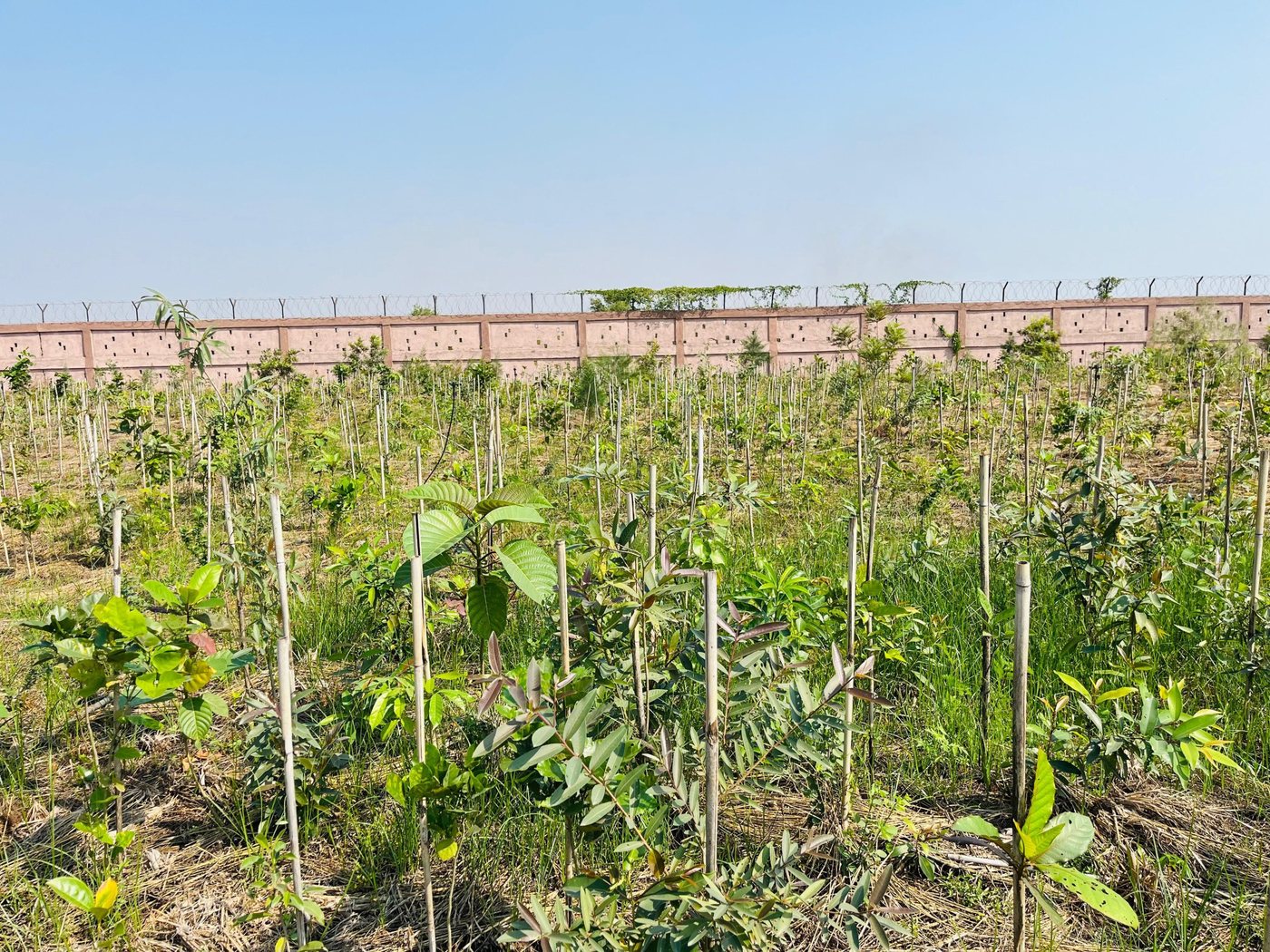
After planting, the ground is covered with straw or similar mulch. Mulch keeps the soil cool, holds moisture and slowly breaks down into food for the soil. You can see it in our site photos as the golden layer between young saplings.
Good for the people who supply it
Cow dung, compost and the other ingredients are produced by farmers, dairies and small compost makers. When a forest project buys them, income reaches rural households. It is a small but steady link between forest restoration and village livelihoods.
Frequently asked questions
What is jeevamrut?
Jeevamrut is a traditional fermented mix, usually made from cow dung, cow urine, jaggery, pulse flour and soil. It is used in natural farming to feed soil life.
Do forests need chemical fertilisers?
Our forests are grown with natural soil enrichment and no chemical inputs, which helps the soil build its own fertility over time.
Can poor, salty or compacted soil be fixed?
Often, yes. With the right soil preparation, mulch and the right native species, even difficult sites such as JNPT have become thriving forests.
Have a difficult site? Ask Forest Creators how Bharat Vann can bring your soil back to life.
Talk to Forest Creators